
From search engines to AI conversations to local maps, this is how customers will find you in the AI era — and why answer engine optimization (AEO) now matters as much as classic SEO.
Get StartedIntroduction: From Search Engines to Answer Engines
The reality is: the internet is no longer a library; it’s an intelligent conversationalist.
Click HereYou don’t need to be a computer whiz to survive this. You just need to know how the machine works so you don’t get left behind.
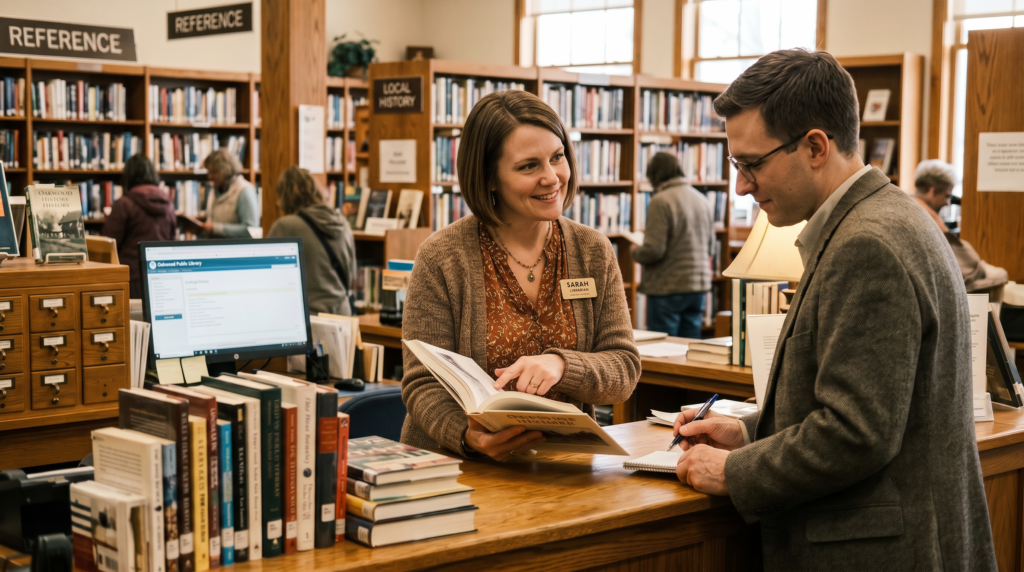
Twenty years ago, if you wanted a well drilled in Larimer County, you didn’t look at a screen. You leaned over a fence and asked your neighbor: “Who’s good?”
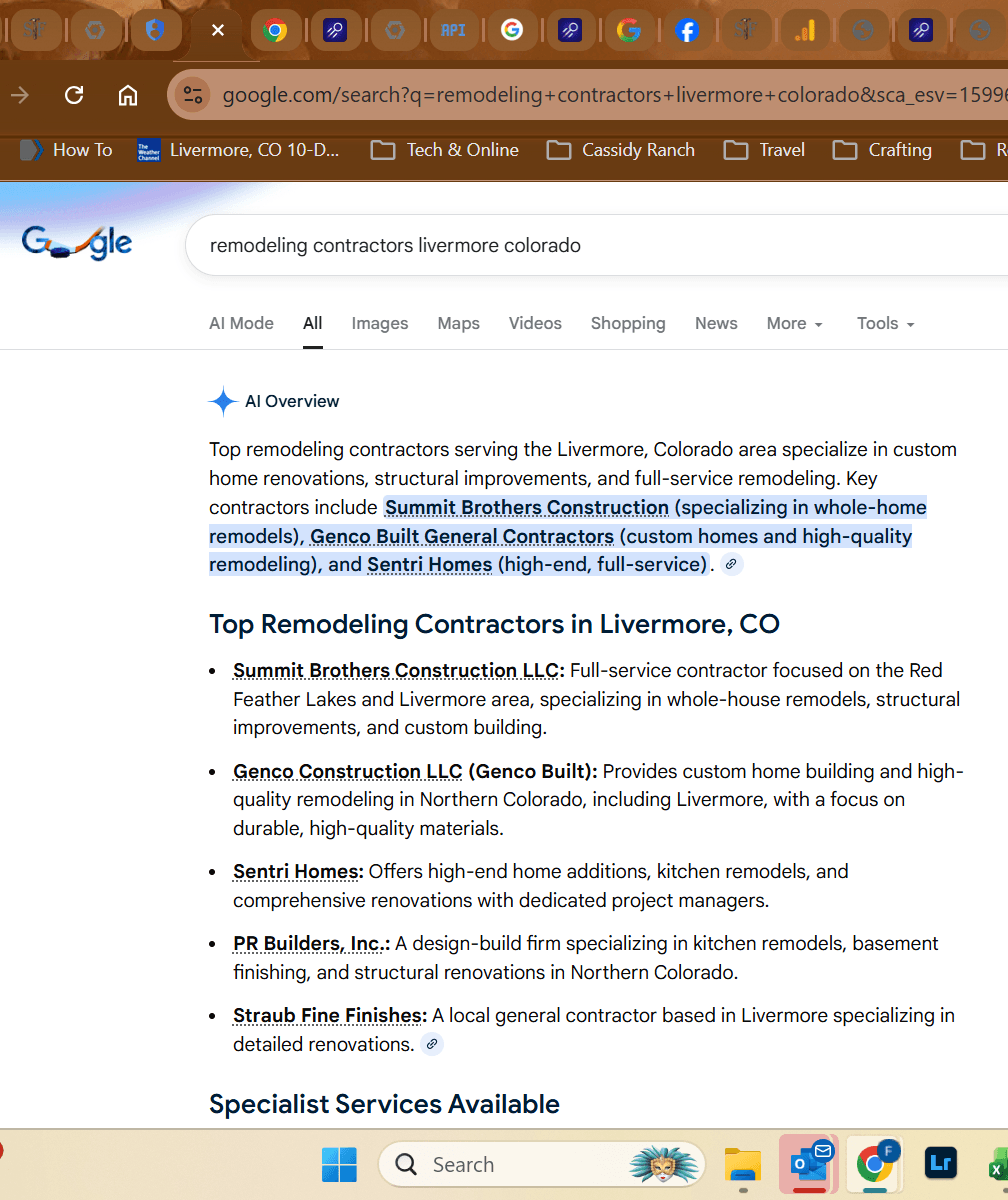
Ten years ago, that conversation moved to Google. You typed: “well drillers near me,” and you clicked the first link on the list.
Today, in 2026, the conversation has shifted again. Now, your customers are picking up their phones and asking a digital assistant: “Siri, find me a mobile welder who services my rural area who has good reviews for heavy equipment repair.”
Part 1: The Four Pillars of Website Optimization (Defined)
Think of the internet like a massive, constantly evolving library. Here are the four different “librarians” at work:
1. SEO (Search Engine Optimization) – The “Card Catalog”

The Old Way: This is for search engines like traditional Google.
The Goal: To rank high on a list of options.
The Rural Application: A customer searches “Excavation Larimer County.” Your website shows up in the list because you used the words “Excavation” and “Larimer County” on your page.
The Form: Keywords.
2. AEO (Answer Engine Optimization) – The “Reference Desk”
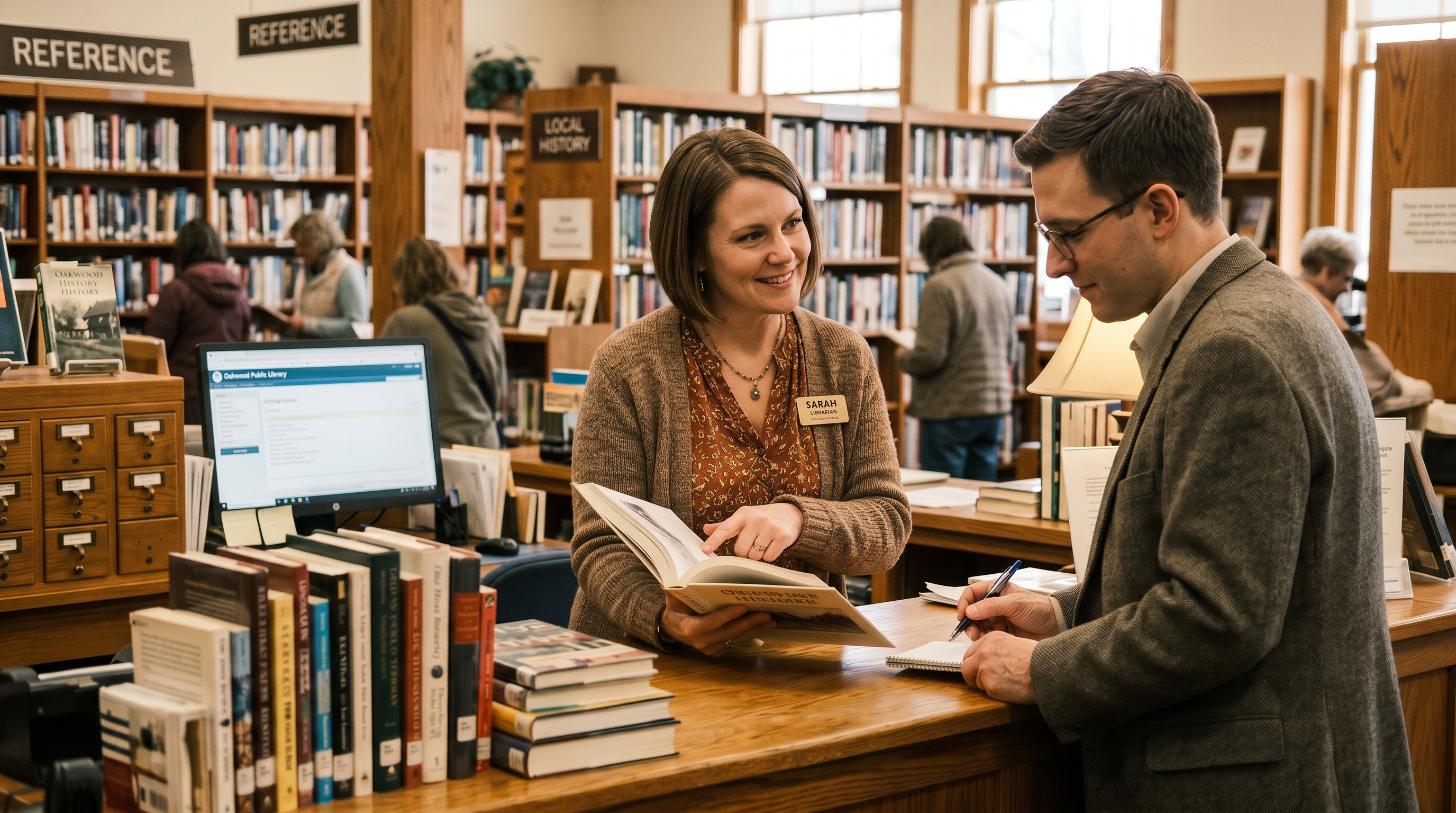
The New Way: This is for voice search (Siri, Alexa) and AI overviews (AI summaries at the top of Google). It is about the AI giving the user ONE perfect answer, not a list of links.
The Goal: To be the ONE answer provided.
The Rural Application: A customer asks, “When is the best time to plant alfalfa in Colorado?” The search engine reads your FAQ section and reads your answer directly to the user (sometimes without them ever visiting your website).
The Form: Questions & Answers (FAQs).
3. LEO (Language Engine Optimization) – The “Local Gossip”
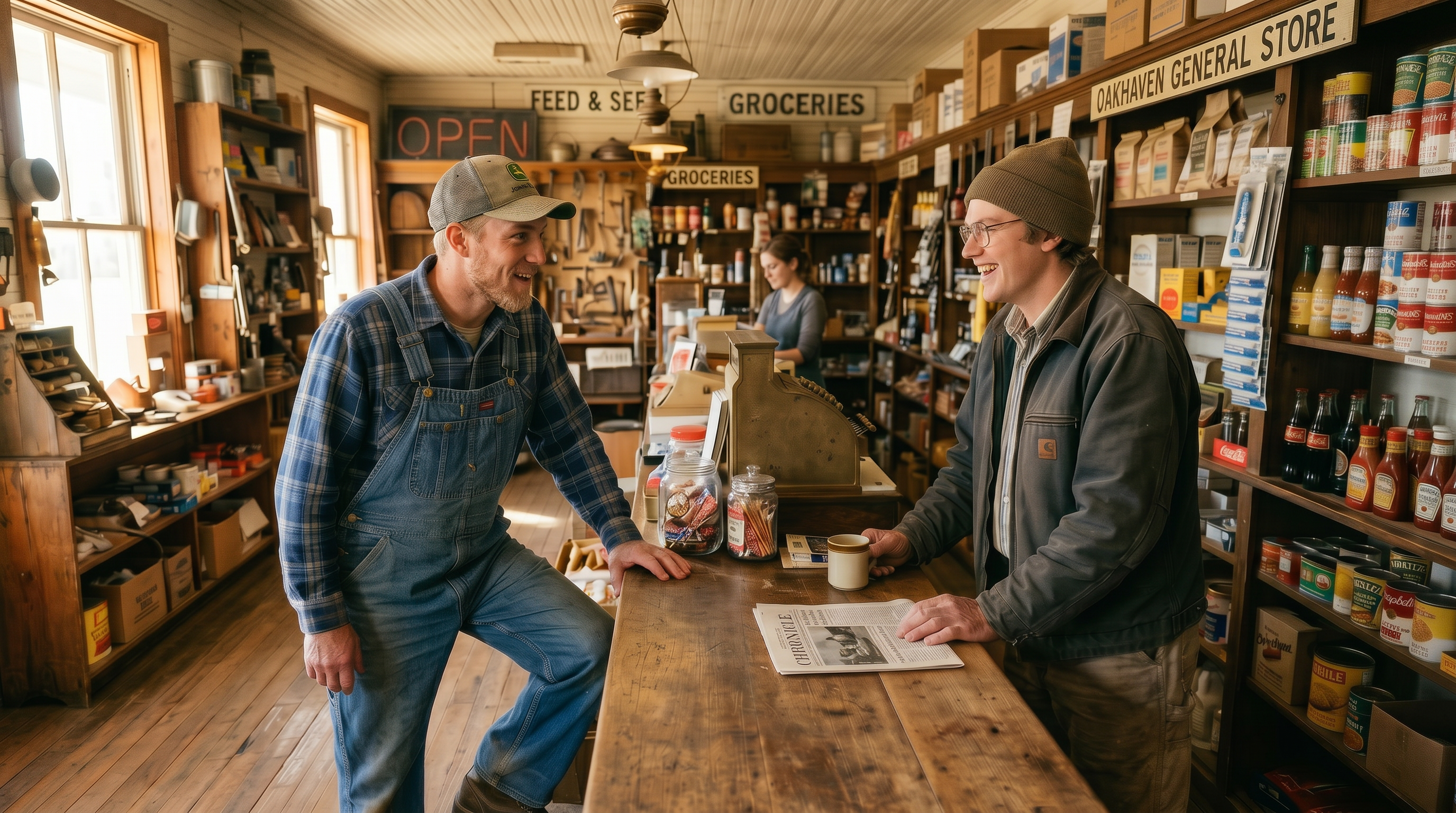
The Future Way: This is optimizing for AI models (like ChatGPT, Gemini, and Claude). These models don’t just “search” the web; they synthesize information and form “opinions.”
The Goal: To be recommended and cited as an authority.
The Rural Application: A newcomer asks ChatGPT: “I’m buying a ranch out in the country. Who should I hire to inspect the septic and fencing?”
If you have strong LEO, the AI says: “Based on local sentiment, [Your Company] is highly recommended. They have deep expertise in the soil types up that way.”
The Form: Authority & Context.
4. GEO (Geographic Engine Optimization) – The “GPS Pin”

The Spatial Way: This is optimizing for maps, local packs, and spatial routing (Google Maps, Apple Maps, in-car GPS navigation).
The Goal: To dominate location-based queries and drive physical routing to your business.
The Rural Application: A tourist blows a trailer tire on a mountain pass and searches “tire repair near me” on Apple Maps. GEO ensures your shop’s pin drops prominently on their screen, verifying your exact location, hours, and phone number so they can route straight to your bay.
The Form: Location Data & Map Proximity.
Part 2: The “Coding” Behind the Scenes (Schema Markup)
How do these engines know who you are? They don’t read the words on your page; they read code.
The most important code for 2026 is called Schema Markup.
Think of Schema like digital cattle branding. To a city slicker, a cow is just a cow. But to a rancher (the AI engine), the brand on the cow tells them who owns the cow. Add a lip tattoo, and he also knows the exact breed, history, and age.

Schema Markup does the same for your website. It is invisible code that sits in the background and tags your data so the AI understands it perfectly.
Without Schema: Your website says “800-555-0199.” The AI thinks that is a phone number, but isn’t sure.
With Schema: The code explicitly says, <This is a local B2B Service Business in Larimer County. This is their Phone Number.>
Why This Matters for Rural Business:
Local Business Schema: You can claim your specific service area (e.g., “We cover Zip Codes 80536 and 80524”). This stops the AI from recommending you to someone three hours away.
Review Schema: This code pushes your 5-star rating directly into the search results, making you look more trustworthy than the guy next to you.
Part 3: The Reality Check: The AI Spy in Your Pocket
If you think this “AI Search” stuff is a fad that won’t happen for another ten years, open the Nextdoor app on your phone right now.
Have you noticed those random blurbs on Nextdoor that ask a simple question like: “Who is the best plumber in the neighborhood?” or “Where can I find the lowest gas prices today?”
Nextdoor is now plugging posts like these directly into your feed. Those are AI generated prompts designed to harvest data.
When you and your neighbors answer those threads, you aren’t just chatting. You are training the models. You are feeding the “Knowledge Graph.” The AI is collecting those answers, tallying the votes, and building a reputation for local businesses.
This is LEO in action right under your nose. If your business isn’t part of the conversation—if you don’t have a reputation that neighbors are willing to type out—you are being written out of the database.
The AI is building a list of “The Trusted Local Providers” and if you aren’t mentioned, you won’t be recommended when someone asks Siri next week.
Part 4: The Future (The Digital Ghost Town)

We need to have a hard conversation about the next 5 to 10 years. Right now, if you ignore AEO and LEO, you might lose a few leads. But in the near future (now and rapidly evolving), AI “Agents” will begin making decisions for consumers.
Imagine a future where a busy homeowner says to their AI: “Siri, find a roofer who can handle metal roofing in high wind zones, get quotes, and schedule the best one for an estimate.” The AI will not browse the Yellow Pages. It will scan its database of trusted, authoritative entities.
If your business has not prioritized LEO (Language Engine Optimization), the AI will look past you like a ghost. It won’t even present you as an option.
If you have ignored these protocols, you will be invisible.
The Long-Term Risk: Businesses that fail to adapt to this “Semantic Web” will effectively become digital ghost towns. You might still exist physically, but the stream of commerce will be routed around you by a machine that barely knows you are there.
Part 5: How to Optimize Your Digital Presence (Actionable Advice)
You don’t need a Silicon Valley budget to fix this. You just need to be intentional with your content strategy.
For SEO (The Foundation)
Action: Ensure your website mentions the specific towns, counties, and service distances of your area (e.g., “Poudre Canyon,” not just “Colorado”).
Tactic: Claim your stake on your service. If you build pole barns, make sure you are using the term in H1 headers.
For AEO (The Answer)
Action: Create a Frequently Asked Questions (FAQ) page on your site.
Tactic: Write the questions exactly how a real human would ask them, and answer them simply, directly, and specifically using the “Q: [Question] A: [Answer]” format.
Example: Question: “How deep should my septic leach field be in Larimer County?”
Answer: “In Larimer County, the standard depth for leach lines is 18 to 36 inches, but you have to account for bedrock and soil type.”
For LEO (The Authority)
Action: Stop writing generic content. AI recommends experts. Write Case Studies about solving specific, local problems.
Tactic: Get featured in local publications or chamber of commerce directories. This links your local entity to the AI that you are a trusted part of the digital community web.
For GEO (The Location)
Action: Claim, verify, and obsessively manage your Google Business Profile and Apple Business Connect profiles.
Tactic: Don’t just list a physical address—define your exact service area polygons (the counties or mountain towns you travel to). Ensure your NAP (Name, Address, Phone Number) is perfectly consistent across every single local directory on the internet so maps trust your location data.
Empowering Success Together
RMM Insights handles the SEO, AEO, LEO & GEO grind
This is a lot to keep up with. My guided toolkit RMM Insights runs the SEO audit, builds your FAQ/answer content, and tracks your local presence — or pair it with Hostinger to DIY the whole stack. Start free; $99/mo for everything.
Conclusion: Don’t Let the Website Search Optimization Acronyms Scare You
At its core, good marketing is still just proving you are dependable. The acronyms change — SEO, answer engine optimization, and all the rest — but the mission is the same: Be the most helpful, trustworthy neighbor in the valley.
If your website is full of honest answers to real customer questions, and your operations are clear, locally rooted, and easy to find on a map, the AI (just like the folks at the feed store) will recommend you. If you try to hide from the evolving world, don’t be surprised when the digital traffic stops driving down your road.
Annotated Resources for Further Reading
- McKinsey & Company: “New front door to the internet: Winning in the age of AI search” — A deep dive into how consumer behavior is shifting from “searching” to “asking,” and why brands must adapt or risk losing 50% of their organic traffic.
- Search Engine Land: “Schema markup: What it is, how to use it, & real-life examples” — A technical but accessible guide on how structured data helps search engines understand what your site means.
- Stanford AI Index Report (2025): Comprehensive data on how rapidly AI is being adopted by consumers for daily decision-making tasks.
Free Download
The Rural Business Website Checklist
The essentials every rural business website needs to get found on Google and turn visitors into customers. Enter your email and I’ll send it right over.

Founder of Rural Mountain Media. I build the websites and run the marketing for rural small businesses across the country — and I run a few of my own. More about me →
Build & market your business with RMM Insights
My guided DIY toolkit runs the analysis, hands you the plan in plain English, and walks you through the work — SEO audit, 60-day web plan, Local Pulse content ideas, and Facebook & Google Ads builders. Start free; the whole toolkit is $99/mo.
Rather have it done for you?
If you’d rather hand it off, let’s talk about your website, SEO, and marketing in a free, no-pressure consultation.
Schedule My Free Consultation